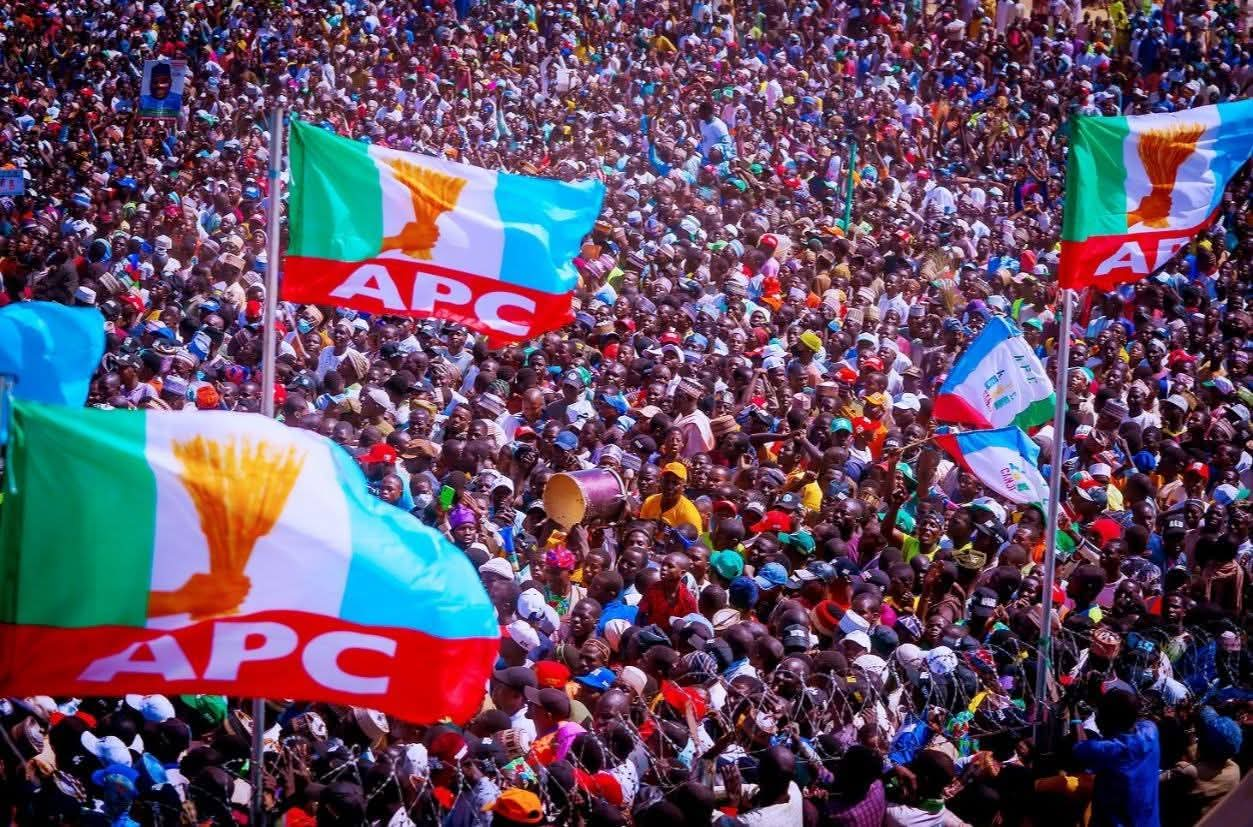
Fllowing the Saturday Area Council polls, the Independent National Electoral Commission (INEC) have declared Umar Abdulahi Abubakar winner after polling 15,536 votes to defeat his opponents by a wide margin.
Mr. Abubakar is from the the All Progressives Congress (APC). has secured another victory in the ongoing Federal Capital Territory (FCT) Area Council elections following the declaration of its candidate, Umar Abdullahi Abubakar, as winner of the Abaji Area Council chairmanship poll.
The Independent National Electoral Commission (INEC) announced that Abubakar defeated his opponents by a wide margin after polling 15,536 votes in the election.
According to the results released by the electoral body, the Peoples Democratic Party (PDP) candidate scored 4,547 votes, while the African Democratic Congress (ADC) trailed far behind with just 37 votes.
With the declaration, Hon. Abdullahi Umar Abubakar of the APC emerged as the duly elected chairman of Abaji Area Council.
The latest victory further strengthens the APC’s dominance in the FCT council elections, where the ruling party has continued to consolidate control over key area councils as results are announced.
Earlier results released by INEC showed that the APC had already won the chairmanship seats in Abuja Municipal Area Council (AMAC), Bwari Area Council and Kwali Area Council, while the PDP recorded a significant win in Gwagwalada Area Council.
In AMAC, incumbent chairman Christopher Maikalangu retained his seat after polling 40,295 votes to defeat candidates of rival parties.
Similarly, APC candidate Joshua Ishaku won the Bwari chairmanship contest with 18,466 votes, while Daniel Nuhu secured victory for the party in Kwali Area Council with 17,032 votes.
The PDP’s lone victory so far came from Gwagwalada Area Council, where its candidate, Mohammed Kasim, defeated the APC candidate after polling 22,165 votes against 17,788 votes.
The FCT Area Council elections, conducted across the six councils of Nigeria’s capital territory, have been closely contested between the APC and PDP, with smaller political parties recording minimal electoral impact in most declared results.
The FCT council elections were meant to be a test of Nigeria’s new electoral framework, but the exercise was overshadowed by widespread complaints.
Across several polling units, voters reported missing names on registers, leaving many unable to cast their ballots despite having Permanent Voter Cards. In some wards, entire alphabetical categories of names were absent, sparking frustration and protests at polling stations.
Observers also noted late arrival of election materials, poor coordination, and confusion over polling unit changes. Many voters said they received little or no notice when their voting locations were reassigned, leading to disenfranchisement.
Beyond logistical lapses, the elections were marred by low turnout and voter apathy, with residents in some areas shunning polling stations altogether. Sporadic incidents of violence and technical glitches with accreditation devices added to the tension.
Civil society groups like Yiaga Africa questioned the integrity of the collation process, warning that lapses in transparency and restricted movement of observers undermined confidence in the outcome.